
The Great Wall, the Terracotta Warriors and Shanghai’s skyline deserve their place on a first China itinerary.
But they are only one version of China.
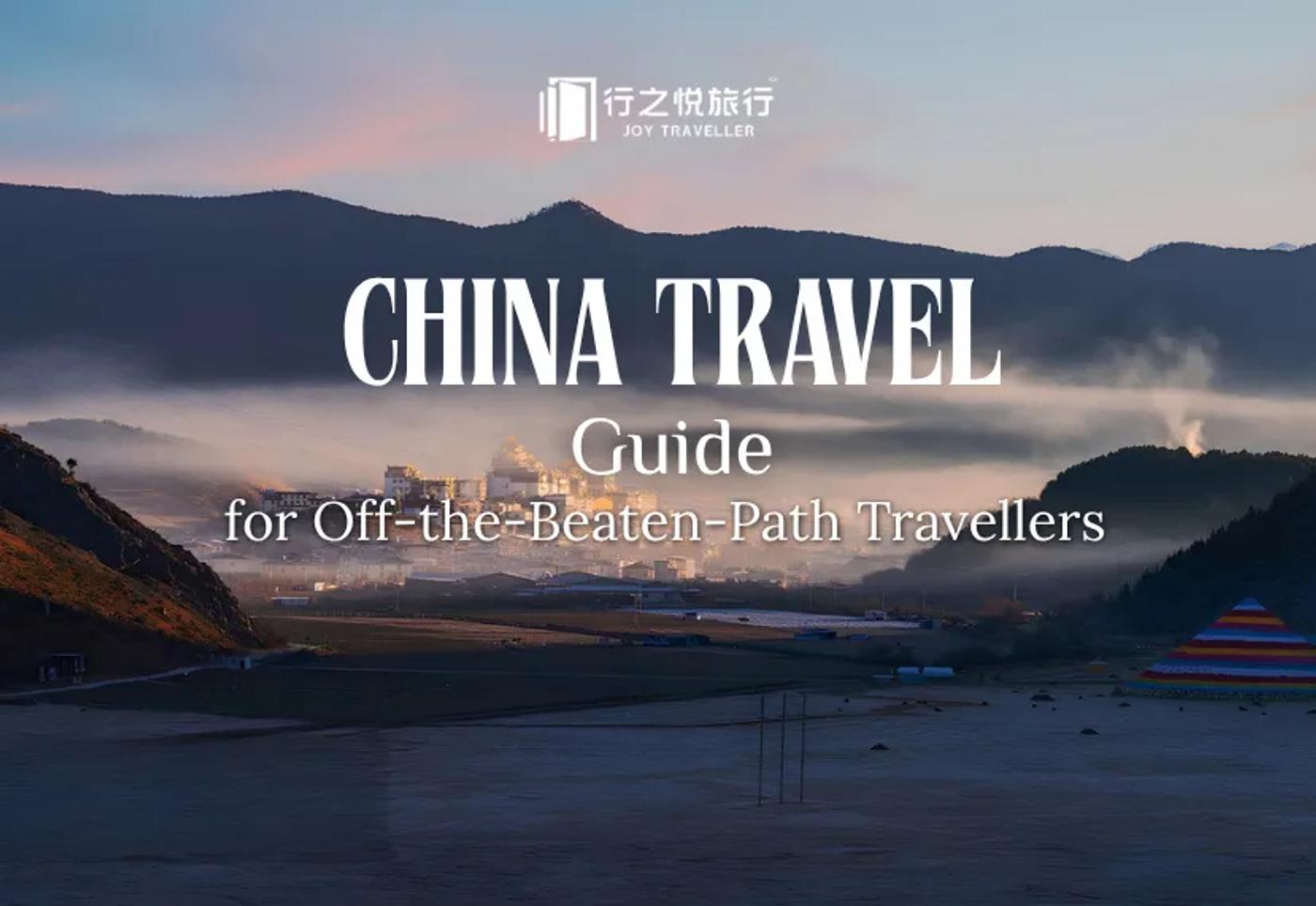
Travel beyond the classic Beijing–Xi’an–Shanghai route and the country begins to feel completely different: Tibetan villages in the mountains, remote roads across western Sichuan, Silk Road neighborhoods in Kashgar and high-altitude landscapes on the edge of the Tibetan Plateau.
If you prefer journeys that feel less obvious — and places where the experience matters more than checking off famous landmarks — start with these four destinations.
1. Jiuzhaigou — Go Beyond the National Park
Best for: Nature, hiking and local culture
Jiuzhaigou is famous for its turquoise lakes, waterfalls and forested mountains.
Most travelers, however, arrive specifically for Jiuzhaigou National Park, spend a day inside and leave.
Stay longer and the experience changes.
The surrounding region offers mountain landscapes, Tibetan and Qiang cultural influences, small villages and opportunities to explore beyond the park itself.
Instead of treating Jiuzhaigou as a sightseeing stop, it can become a destination in its own right.
What to experience
- Jiuzhaigou National Park
- Mountain villages
- Local cultural encounters
- Hiking
- Songpan Ancient Town
- Landscapes beyond the main scenic area
Your existing five-day Jiuzhaigou extension already follows this slower approach, combining Songpan, a visit to a Baima Tibetan village, Jiuzhaigou and hiking around Jiawuhai rather than limiting the trip to the national park alone.
Who should choose Jiuzhaigou?
Choose Jiuzhaigou if you want spectacular nature but still prefer a relatively accessible addition to a wider China itinerary.
It works particularly well as an extension from Chengdu.
Suggested time: 4–5 days
2. Muli & Western Sichuan — For the Journey Itself
Best for: Road trips, mountains and remote travel
If Jiuzhaigou is an introduction to western China, Muli and western Sichuan go much deeper.
This is not a trip built around one famous attraction.
The appeal is the journey itself.
Remote mountain roads connect monasteries, highland lakes, small settlements and some of Sichuan's most dramatic landscapes.
A longer route can continue through Lugu Lake and Daocheng Yading, creating a completely different experience from China's classic city-to-city itinerary.
Your 13-day Muli route travels from Chengdu through Xichang and Muli before continuing to Lugu Lake, Eya, Daocheng Yading and Xinduqiao, making it one of the most remote and landscape-focused journeys in your current portfolio.
What to expect
This is the kind of journey where you travel for:
- Mountain roads
- Tibetan Buddhist culture
- Remote monasteries
- Lakes and highland scenery
- Small settlements
- Long overland drives
- Hiking and outdoor experiences
It is less polished and less predictable than China's classic tourist route.
That is exactly why some travelers will love it.
Who should choose Muli?
Choose this route if you've already traveled widely, enjoy road trips and don't mind spending more time getting somewhere.
Suggested time: 10–13 days
3. Kashgar — Follow the Silk Road to Western China
Best for: History, architecture and cultural contrast
Travel far enough west and China begins to feel very different.
Kashgar has been shaped for centuries by its position along the historic Silk Road.
Instead of imperial palaces and skyscrapers, travelers encounter old neighborhoods, markets, mosques, courtyards and a food culture deeply connected with Central Asia.
Walk through the old city and the experience feels far removed from Beijing or Shanghai.
What to experience
- Kashgar Old City
- Traditional neighborhoods
- Local markets
- Uyghur food
- Historic Silk Road culture
- Day trips into the surrounding mountain landscapes
But Kashgar becomes much more interesting when it isn't treated as an isolated city break.
It works best as part of a larger Silk Road journey across western China.
You can combine it with other destinations in Xinjiang depending on the season, available time and your interests.
Who should choose Kashgar?
Choose Kashgar if history interests you, but you want something very different from China's imperial capitals.
Best for: history, architecture, food and Silk Road culture.
Planning a Silk Road journey? We can include Kashgar in a customized route built around your travel dates and interests.
4. Gannan, Gansu — A Different Side of the Tibetan Plateau
Best for: Tibetan culture, grasslands and slow travel
You don't necessarily need to travel to Tibet to experience Tibetan cultural landscapes.
Gannan Tibetan Autonomous Prefecture, in southern Gansu, offers monasteries, grasslands, mountain scenery and Tibetan communities while remaining outside China's most conventional international tourism routes.
The region is particularly rewarding for travelers who prefer slower overland journeys.
Rather than rushing between famous attractions, much of the experience comes from moving through the landscape itself.
What to experience
Depending on your route, a Gannan journey can include:
- Tibetan Buddhist monasteries
- Highland grasslands
- Small towns and villages
- Mountain scenery
- Local food
- Overland road trips
One of the best-known cultural stops in the region is Labrang Monastery in Xiahe, but the appeal of Gannan extends far beyond a single landmark.
Who should choose Gannan?
Choose Gannan if you are interested in Tibetan culture and landscapes but want something quieter and less obvious than China's classic routes.
Best for: culture, photography, road trips and slower travel.
Which Alternative China Destination Is Right for You?
If you're deciding between them, think less about which destination is “best” and more about the experience you want.
If you want...
Consider
Spectacular nature without going extremely remote
Jiuzhaigou
A genuine mountain road trip
Muli & Western Sichuan
Silk Road history and cultural contrast
Kashgar
Tibetan culture and highland landscapes
Gannan
How Much Time Do You Need?
For this kind of China trip, slower is usually better.
Trying to squeeze remote regions between Beijing and Shanghai can defeat the point of traveling off the beaten path.
As a rough guide:
Jiuzhaigou: 4–5 days
Muli & Western Sichuan: 10–13 days
Kashgar: 3–4 days, longer as part of a Xinjiang route
Gannan: around 4–7 days depending on your route
If you have two or three weeks in China, another option is to combine one lesser-known region with a few classic destinations.
For example:
Beijing → Xi’an → Chengdu → Jiuzhaigou
or
Beijing → Xi’an → Western China → Kashgar
You don't have to choose between seeing China's icons and going deeper.
The key is leaving enough time for both.
Go Beyond the China Checklist
There is nothing wrong with seeing the Great Wall or the Terracotta Warriors.
But China becomes much more interesting when the itinerary stops being a checklist.
Stay a little longer.
Take the road that requires another day.
Spend time in a village rather than immediately moving to the next major city.
For travelers who value landscape, local culture and the journey itself, places such as Jiuzhaigou, Muli, Kashgar and Gannan reveal a very different side of China.
At Joy Traveller, we can incorporate these destinations into a customized journey based on your travel dates, pace and interests.
Tell us what kind of China you want to experience, and we'll help design the route around you.